


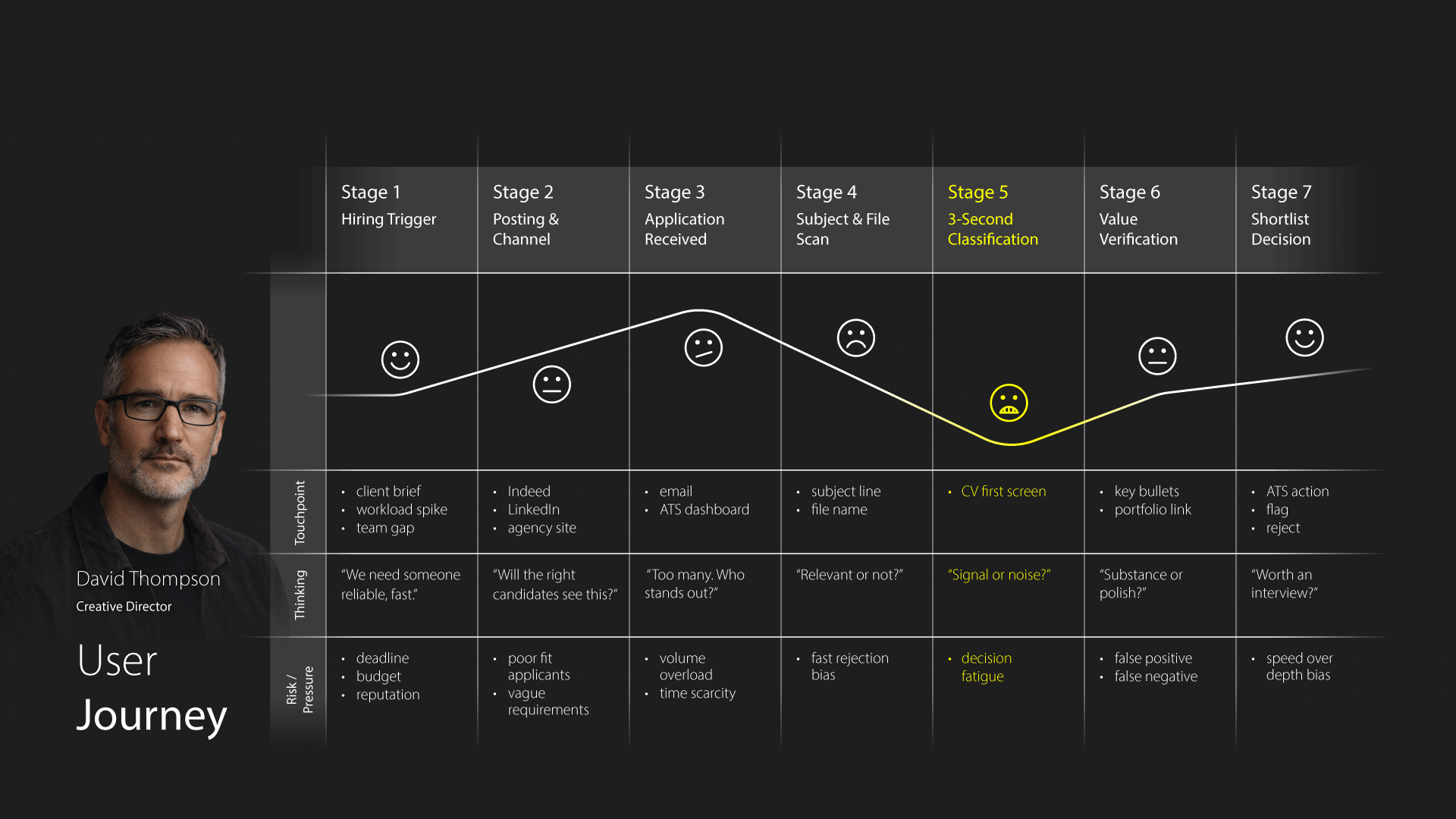
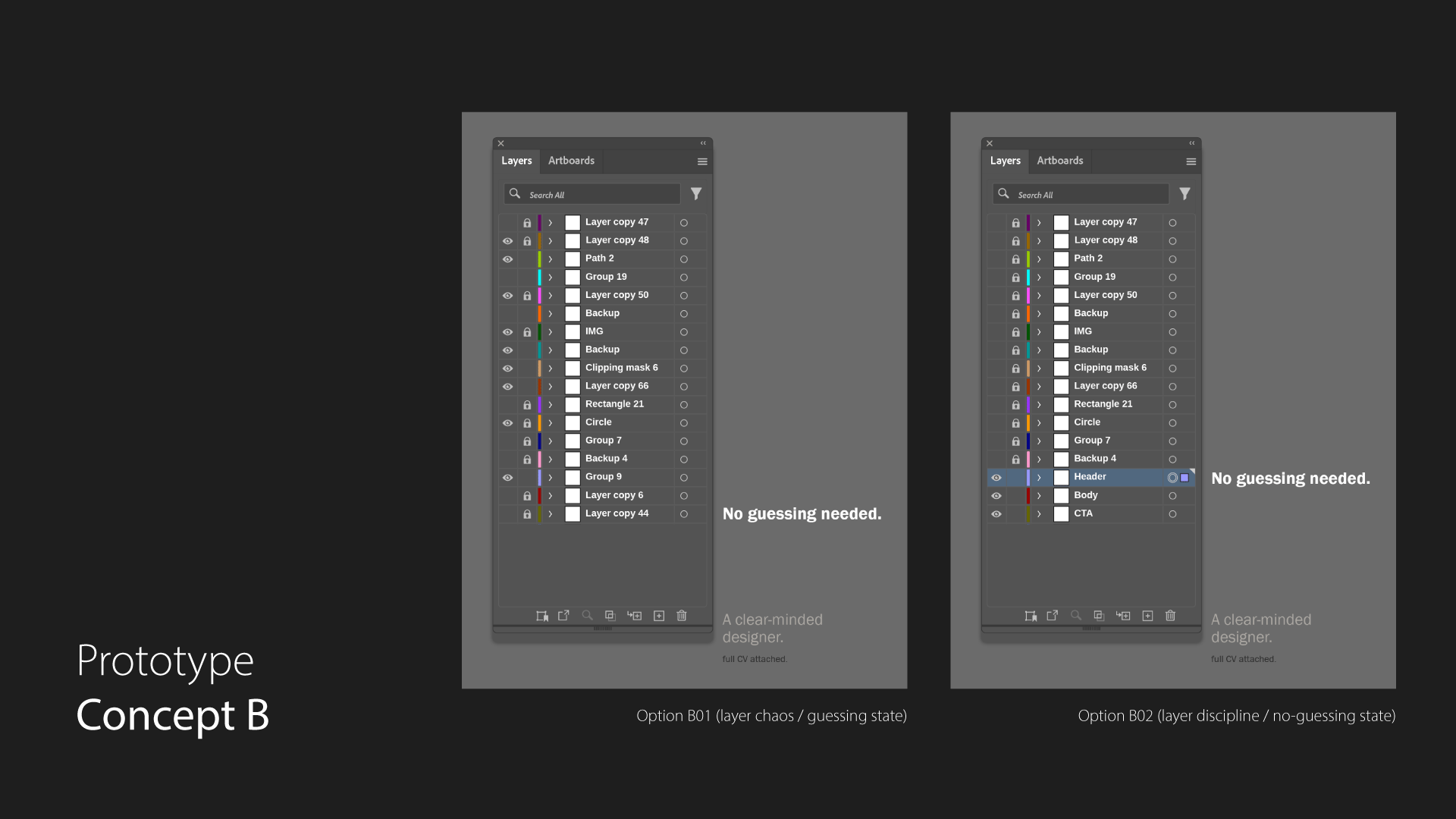


The project began by observing structural friction in the job search process. I realized that repeated silence from applications wasn't a personal rejection but a communication design failure. Traditional CVs often overload information, making it difficult for creative directors to quickly grasp a candidate's value within the first few seconds of a high-pressure screening.
The core challenge was balancing professional creativity with rapid classification needs. While candidates often over-polish visuals to impress, employers prioritize filtering and decision-making under heavy cognitive load. I had to design a system that survived both machine parsing and human scanning while ensuring the designer's thinking logic remained visible over decorative noise.
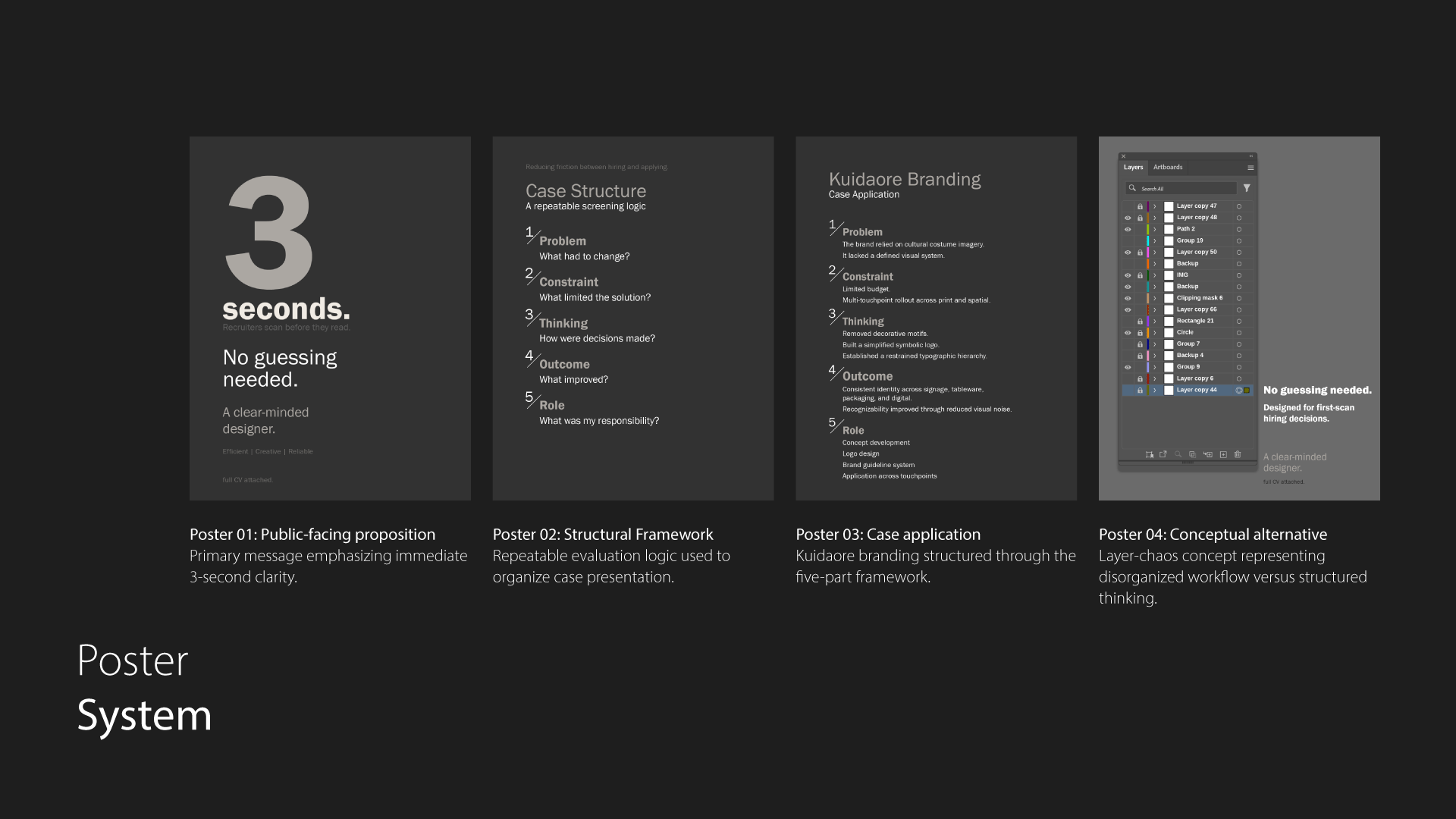
I applied UX methodology to restructure graphic communication, moving from an aesthetic-first to a logic-first approach. I developed a fixed "signal architecture" for each project, organizing content into five scannable modules: Problem, Constraint, Thinking, Outcome, and Role. This structured grid focuses on hierarchy and contrast to support immediate recognition before any long-form persuasion begins.
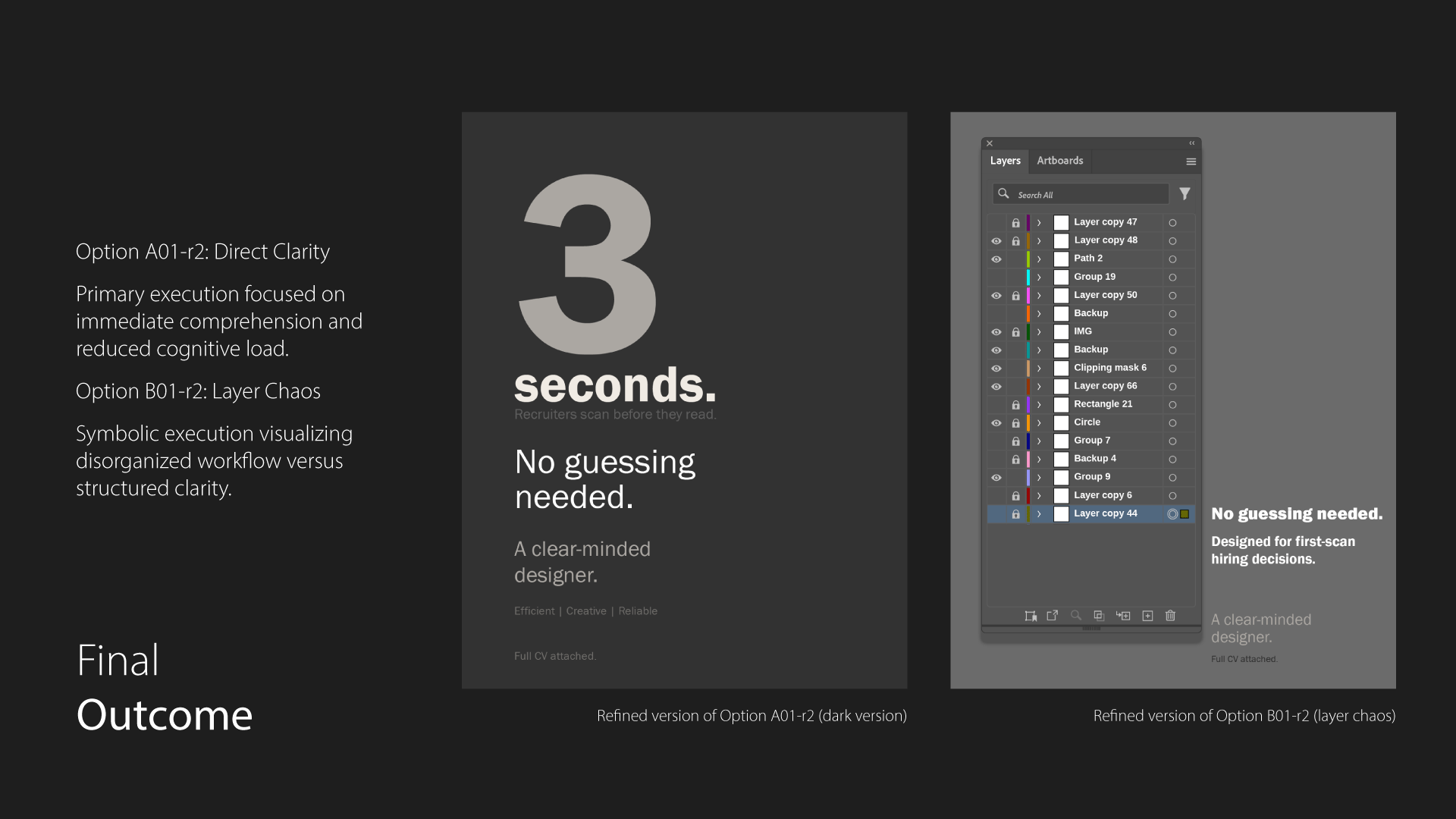
Testing with industry professionals confirmed that a structured hierarchy significantly improved scan speed and reduced hesitation. By treating the application as a decision interface, the project successfully lowered cognitive load for employers. The final posters provide a repeatable logic that increases credibility, ensuring a candidate's substance and decision-making skills are communicated in just three seconds.


