

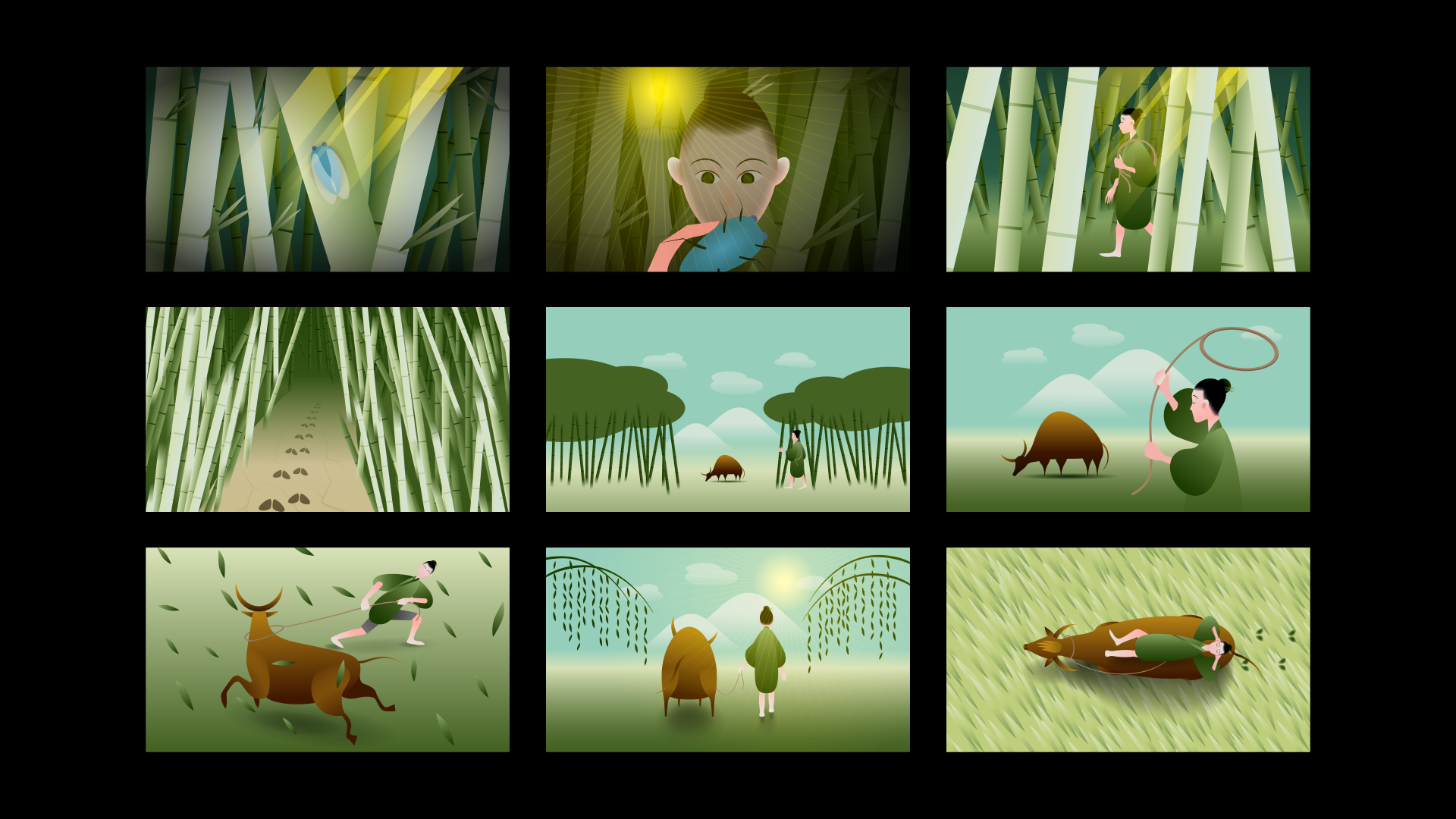
This assignment focuses on creating a complete 30-second animated short that demonstrates storytelling, timing, pacing, and motion design skills learned throughout the course. The objective is to translate a narrative into motion using clear structure, smooth transitions, and intentional movement, while maintaining technical accuracy in composition, animation principles, and final output at 1920×1080 resolution.
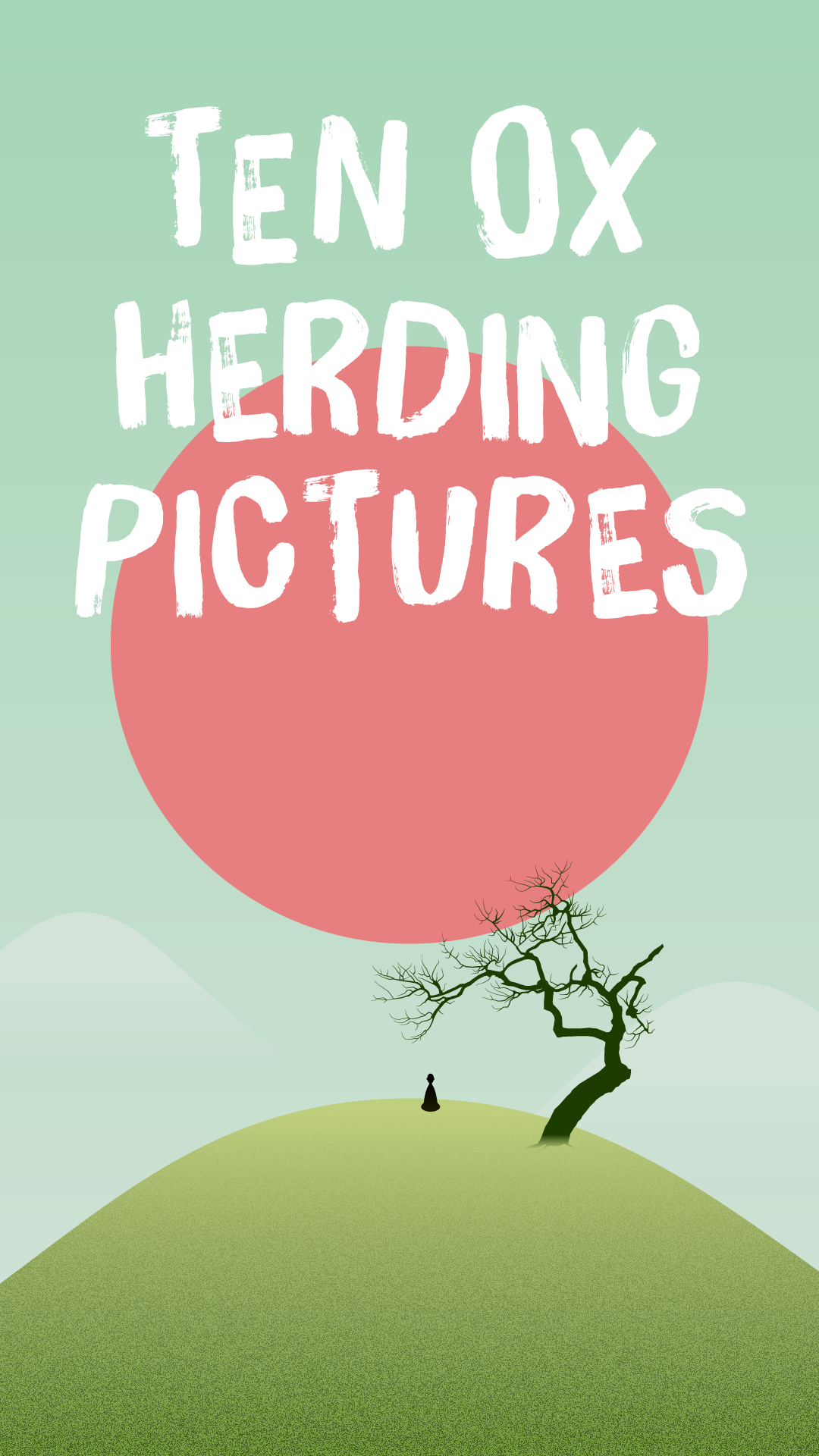

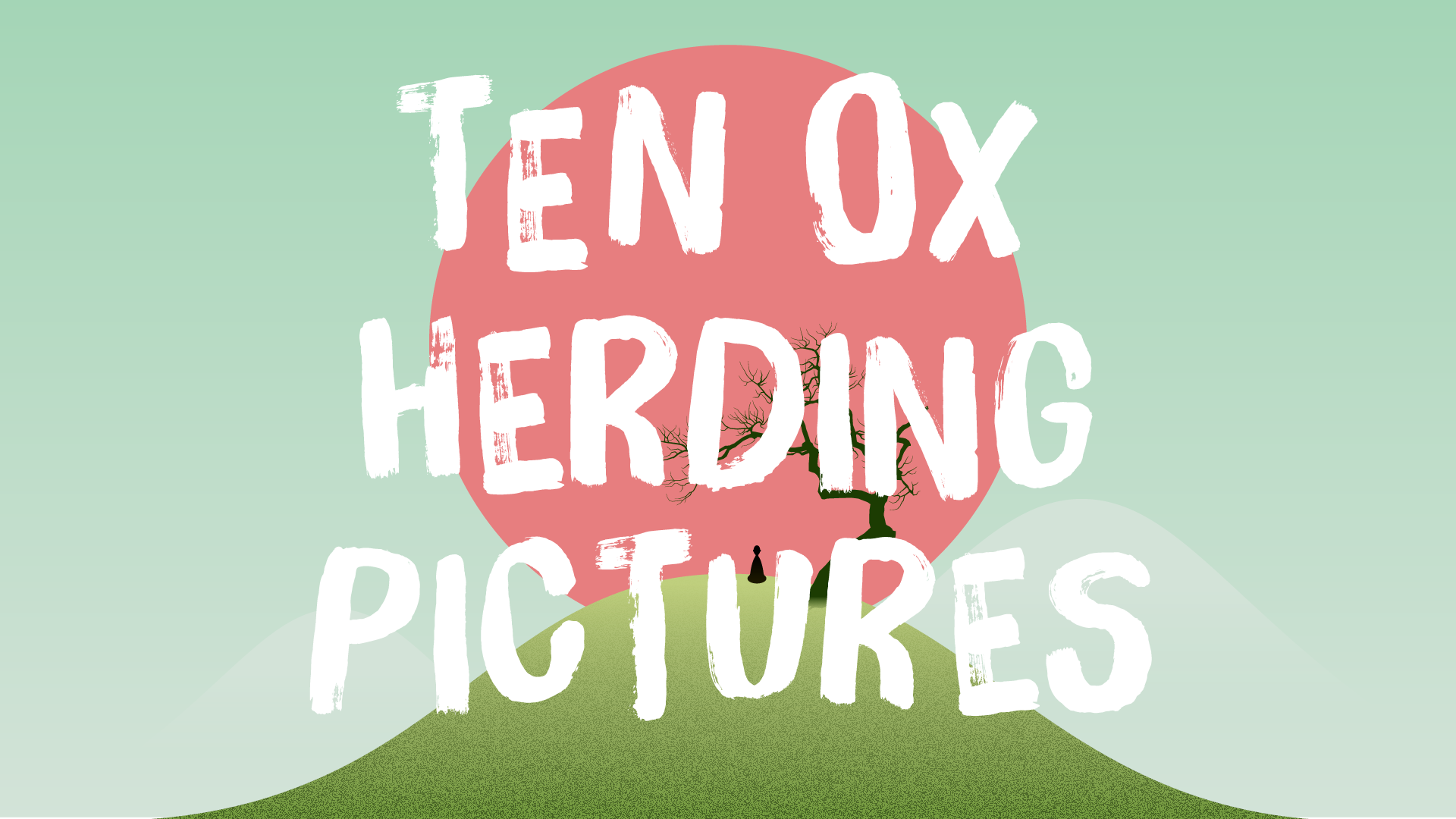
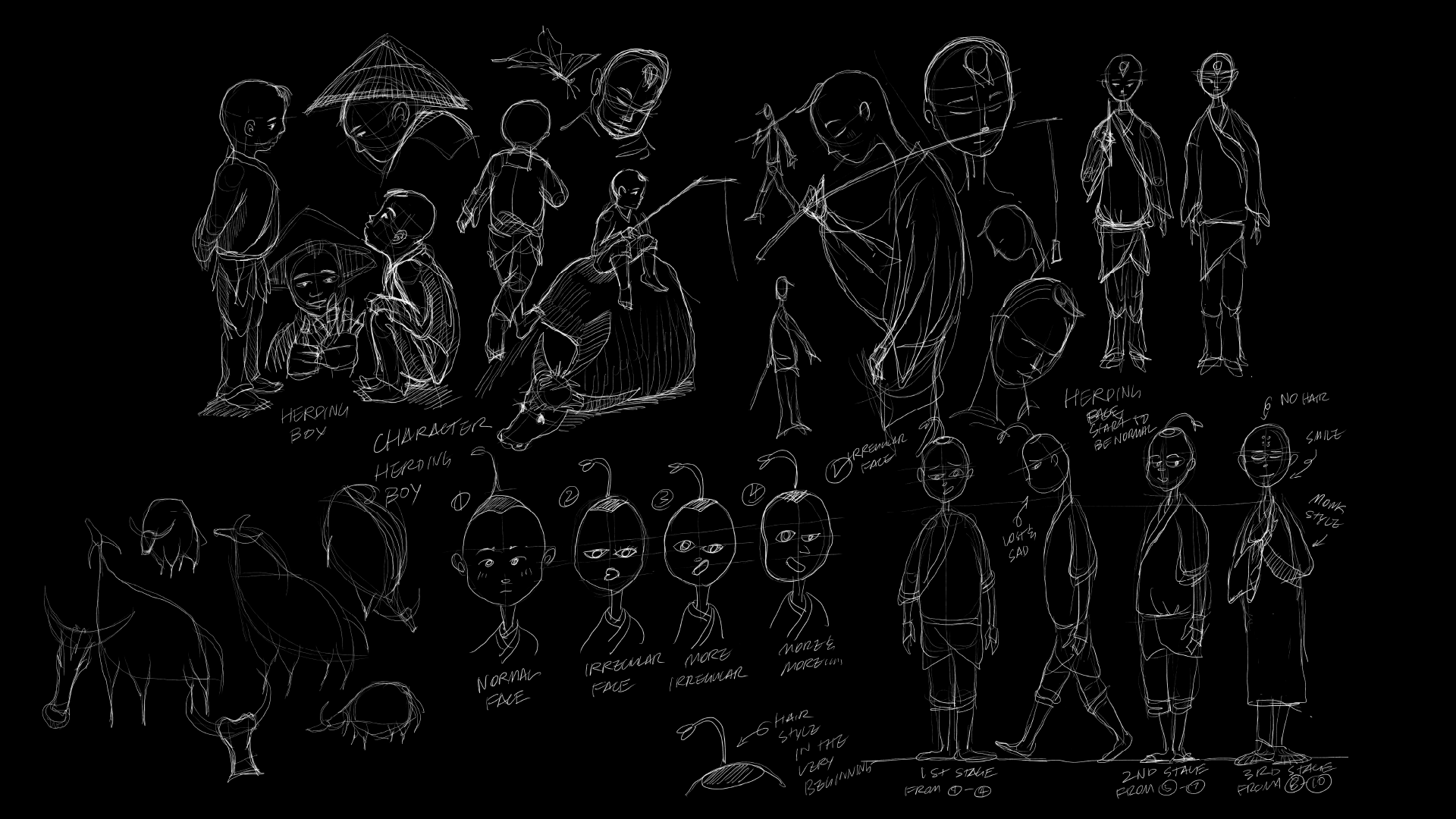
The concept of the animation is based on the traditional Chinese Zen story Ten Ox Herding Pictures (十牛圖), which represents stages of self-discovery and inner growth. I adapted this philosophical narrative into a concise visual story suitable for a 30-second format. I began by sketching the main characters: the herding boy and the ox. The sketches focus on body proportions, posture, facial expression, and emotional state at different stages of the journey. Rather than aiming for realism, I simplified the forms to make them easier to animate and more symbolic. These early drawings helped define the visual language, emotional tone, and pacing of the animation, while also serving as a foundation for later storyboard and style frame development.
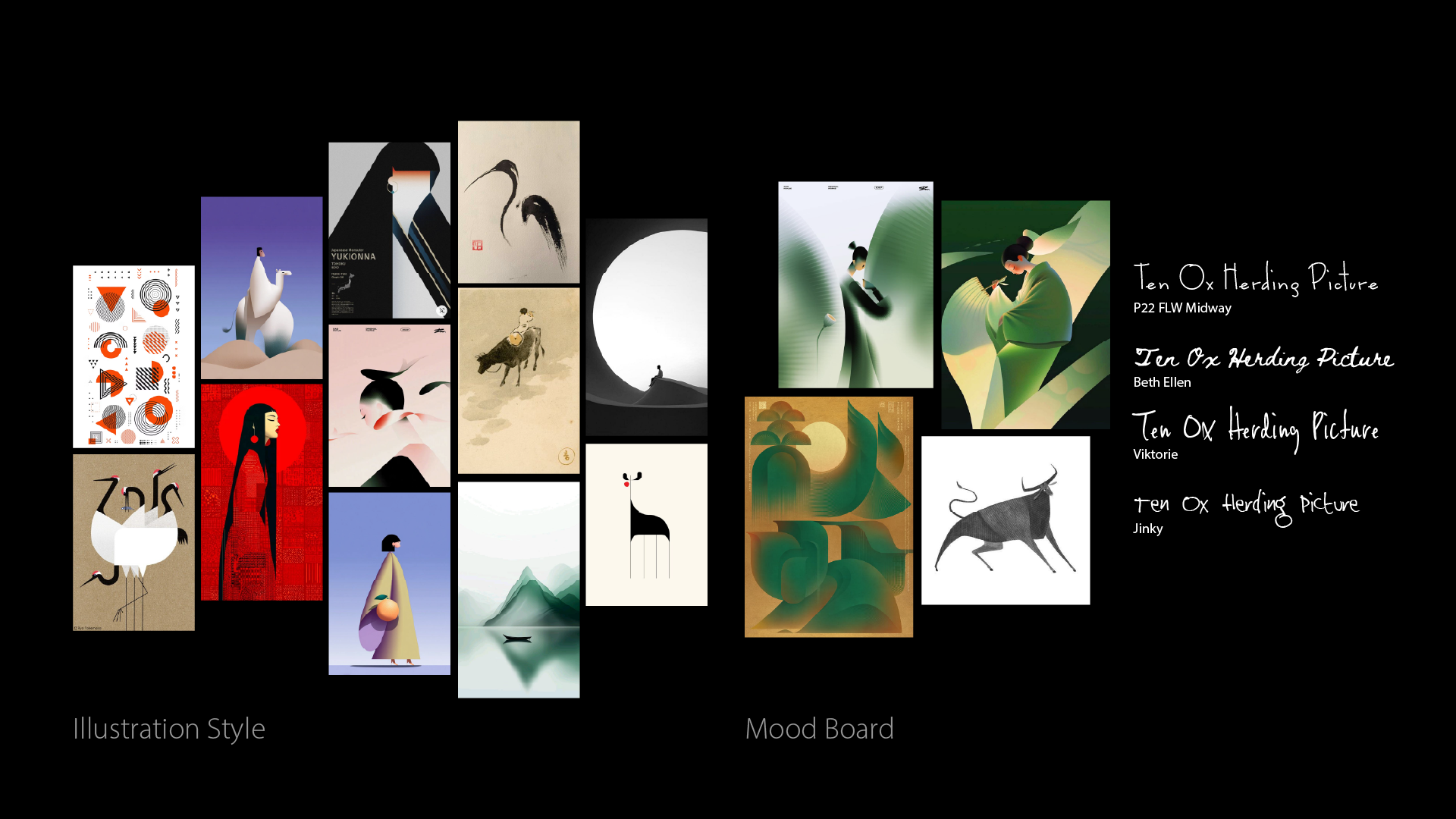
To challenge my existing habits, I deliberately chose an illustration style different from my previous work. I explored a visual direction based on simplified geometric shapes, soft gradients, and restrained details. The style combines influences from both Eastern aesthetics, such as calm composition and symbolism, and Western illustration approaches that emphasize clarity and structure. By reducing visual noise, the focus shifts toward movement, rhythm, and emotional flow rather than surface detail. This approach also supports animation efficiency, as cleaner shapes are easier to rig and animate consistently. The limited color palette and minimal textures help maintain visual cohesion across scenes while reinforcing the meditative tone of the Zen story.
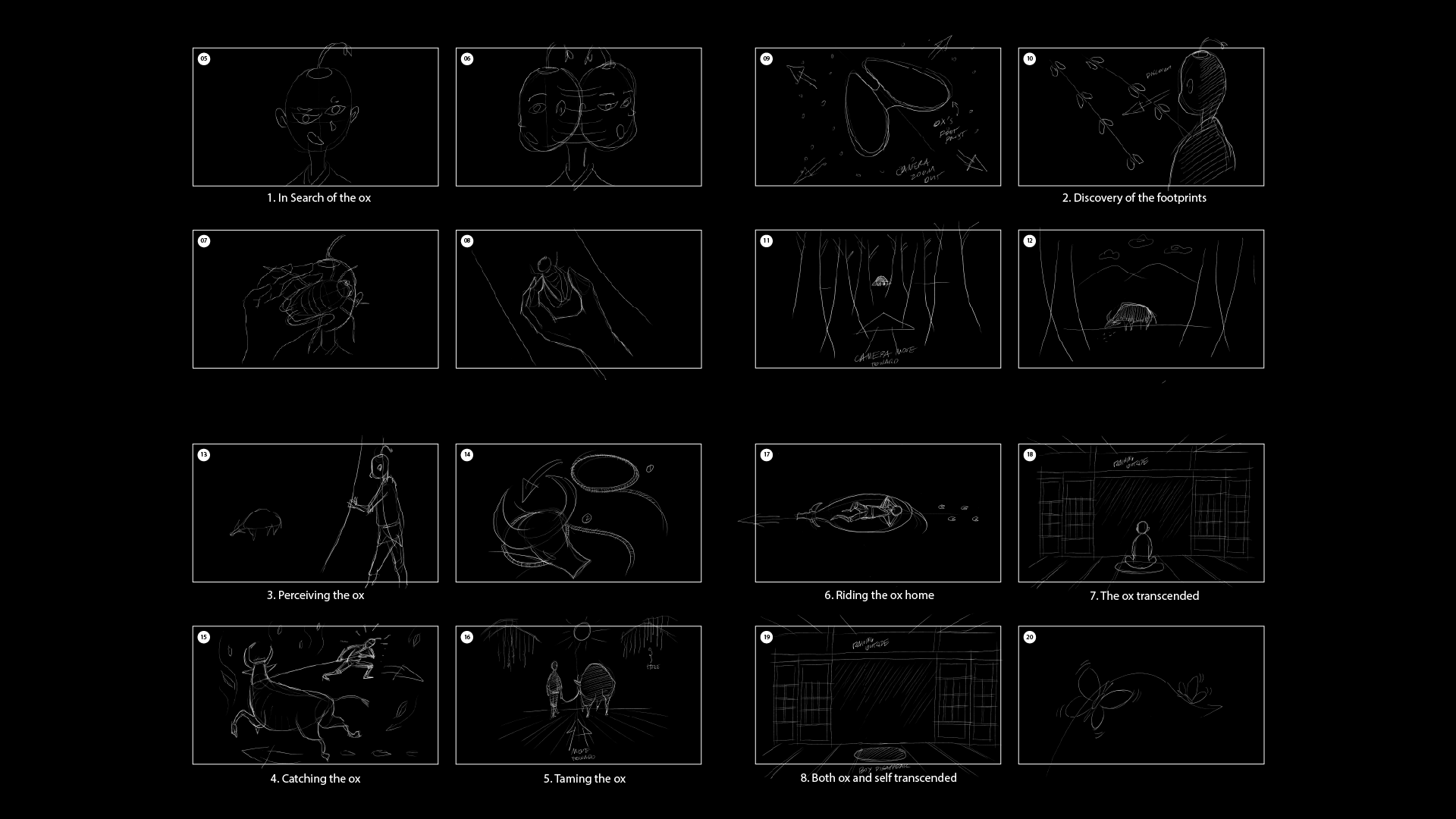
All storyboards were drawn by hand to maintain flexibility during the planning stage. Each frame focuses on camera angle, character placement, and directional movement to support cinematic storytelling. I paid special attention to transitions between scenes, ensuring that visual flow remains smooth within the strict 30-second time limit. One of the main challenges was condensing a multi-stage philosophical narrative into a short duration without losing clarity. To address this, I prioritized key moments and simplified actions, allowing motion and composition to communicate meaning efficiently. The storyboard phase was critical in balancing narrative depth with timing constraints and served as a blueprint for both animatic testing and final animation execution.
After finalizing the storyboard and animatic, I created detailed style frames to define lighting, color, and composition for each scene. Each character was separated into multiple layers, including head, torso, limbs, and secondary elements, to allow flexible animation control. I animated the scenes in After Effects, focusing on natural movement, easing, and timing to create smooth and believable motion. Subtle adjustments were made to spacing, speed, and camera movement to improve visual rhythm. After assembling all scenes, I refined transitions and pacing to ensure continuity across the full 30 seconds. The final result emphasizes calm motion and narrative clarity, aligning with the philosophical theme of the story.


